
Colorado Sales and Use Tax Exemption for Wound Care Products
Colorado provides a sales and use tax exemption for certain types of medical supplies purchased by hospitals, ambulatory surgical facilities, long-term acute care facilities, and skilled nursing facilities. Colo. Rev. Stat. § 39-26-717(2)(a) exempts sales of prescription drugs furnished by a practitioner as part of professional services provided to a patient, and Colo. Rev. Stat. § 39-26-717(2)(k) exempts sales of nonprescription drugs or materials on the same terms. Under 1 CCR 201-4, Rule 39-26-717(1)(e)(i)(A), an item is “furnished to a patient” when it leaves with the patient on discharge or is administered topically at the facility so that it is absorbed into the patient’s body.
Agile Consulting Group's Recent Guidance
The pioneers at Agile Consulting Group submitted a private letter ruling request to the Colorado Department of Revenue on behalf of a long-term acute care facility client, arguing that medicated wound care dressings, non-medicated dressings, bandages, and gauze, and skin closure products qualify for exemption under Colorado law. On July 20, 2026, the Office of Tax Policy of the Colorado Department of Revenue issued PLR 26-004 to Agile’s client, confirming all three categories of wound care products are exempt from Colorado sales tax. The key qualification the Department imposed across all three categories is important to note: all items must be intended to be furnished by a practitioner as part of professional services to patients. Items purchased for inventory that are not dispensed under a practitioner's authority or not transferred to a patient would not qualify. The ruling covers only state and state-administered local taxes; self-collected home-rule cities in Colorado are not bound by this ruling.

Medicated Wound Care Dressings
- Antimicrobial Silver Dressings: Silver nitrate or silver sulfadiazine releases bactericidal ions into the wound bed (e.g., Acticoat Flex 3).
- Antimicrobial Honey Dressings and Paste: Medical-grade honey is absorbed into the body and delivers antibacterial action (e.g., MEDIHONEY Paste).
- PHMB-Impregnated Dressings: Polyhexamethylene biguanide kills bacteria and fungi and inhibits biofilm (e.g., Kerlix AMD).
- Analgesic Dressings: Lidocaine diffuses into tissue to produce localized analgesia (e.g., Astero Hydrogel with 4% Lidocaine).
- Enzymatic Debriding Agents: Collagenase digests necrotic tissue without harming healthy granulation tissue (e.g., Santyl Ointment).
- Growth Factor Dressings and Gels: Becaplermin and similar recombinant proteins promote granulation tissue formation (e.g., Regranex Gel).
- Charcoal Dressings: Silver-impregnated activated charcoal manages odor and bacterial load in malodorous wounds (e.g., ACTISORB Silver 220).
- Collagen-Based Dressings: Collagen and oxidized regenerated cellulose bind excess matrix metalloproteinases (e.g., Promogran Prisma).
Non-Medicated Dressings, Bandages, and Gauze and Skin Closure Products
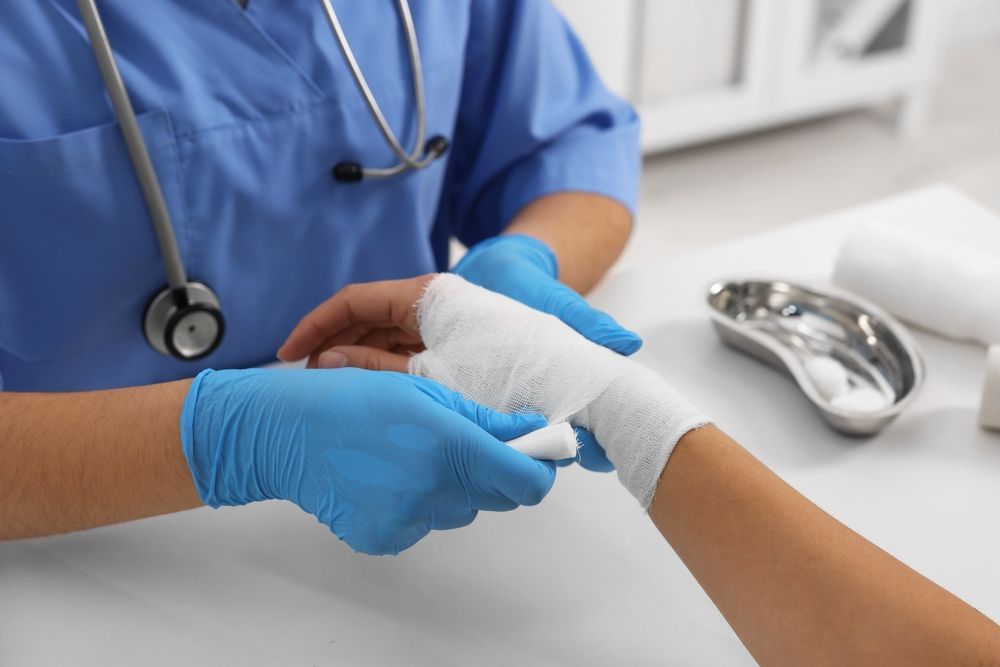
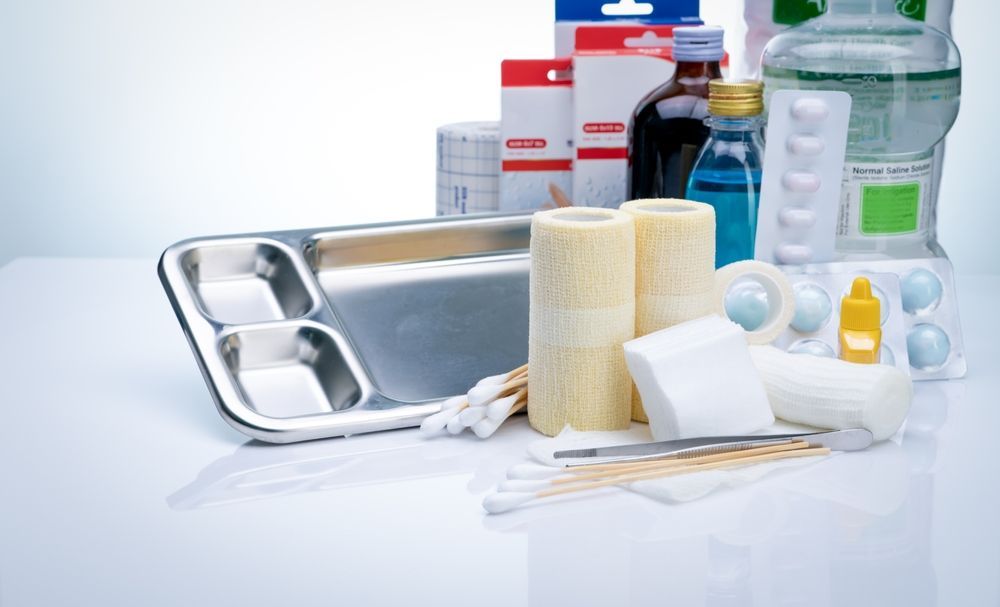
Non-medicated wound care products qualify for the state and state-administered sales and use tax exemption under Colo. Rev. Stat. § 39-26-717(2)(k). PLR 26-004 confirmed that this exemption applies for these products because a licensed physician prescribes the specific item to meet the patient’s clinical needs, and the item is either applied during the service or leaves with the patient.
Qualifying items include:
- Wound dressings applied to protect, absorb exudate, and support tissue regeneration (e.g., DuoDERM Signal Dressing)
- Bandages, including compression bandages that reduce swelling in venous leg ulcers and lymphedema (e.g., Threeflex 3-Layer Compression System)
- Gauze used as a barrier against contamination and to secure orthopedic splints and braces
- Surgical skin closure devices held by pressure-sensitive adhesive that draw wound edges together (e.g., Zip 16 Surgical Skin Closure Device)
- Skin closure strips that approximate the edges of superficial wounds (e.g., 3M Steri-Strip Adhesive Skin Closure Strips)
How to Claim the Colorado Sales & Use Tax Exemption
To claim the Colorado sales tax exemption on qualifying wound care purchases, healthcare providers should complete a Colorado Form DR 5002, Declaration of Wholesale or Entity Sales Tax Exemption and provide it to their medical suppliers at the time of purchase. The healthcare provider will complete Section 4 for “Other Exemption” and include reference to the applicable exemption, either under Colo. Rev. Stat. § 39-26-717(2)(a) or Colo. Rev. Stat. § 39-26-717(2)(k). Providers should maintain documentation supporting the practitioner's role in dispensing or furnishing the items to patients, as the Department's key qualification requires that items be furnished by a practitioner as part of professional services.

How to Recover Colorado Sales Taxes Paid in Error to Vendors
Healthcare providers that have paid sales tax on qualifying wound care products should first request the refund from the vendor. If the vendor declines, the purchaser files Colorado Form DR 0137B, Claim for Refund of Tax Paid to Vendors, which covers state and state-administered local taxes. Colorado’s lookback period is three years from the date the tax was paid to the vendor. A supported claim includes purchase invoices, proof of tax paid, a refund calculation spreadsheet, an explanation of why the vendor did not refund it, and product labeling confirming “Rx Only” status for the medicated items. The consultants at Agile Consulting Group have experience in recovering overpaid sales taxes from the Colorado Department of Revenue and can assist any Colorado healthcare provider with this cumbersome process.
Reach Out to Us with Questions
If you have any questions, comments or would like to discuss the specific circumstances you are encountering in regard to this issue or need assistance with a sales tax refund review or any other sales and use tax issue, please contact a member of Agile Consulting Group's sales tax consulting team at (888) 350-4TAX (4829) or via email at info@salesandusetax.com.