Tennessee Sales and Use Tax Exemption for Prescription Drugs Used in Healthcare Facilities
AGILE CONSULTING GROUP
Tennessee exempts from sales and use tax any drug dispensed pursuant to a prescription under Tenn. Code Ann. § 67-6-320(a). To qualify, a product must meet three requirements: it must be a "drug" as defined at Tenn. Code Ann. § 67-6-102(35), it must be for human use, and it must be dispensed pursuant to a prescription issued by a duly licensed practitioner. A qualifying "drug" is broadly defined as a compound, substance, or preparation intended for use in the diagnosis, cure, mitigation, treatment, or prevention of disease, or intended to affect the structure or function of the body, and must carry an FDA "Rx Only" label designation. For healthcare facilities such as hospitals, nursing homes, long-term acute care facilities, and ambulatory surgery centers, this exemption extends to a wide range of clinical products purchased for patient care, provided those products are subsequently dispensed to patients pursuant to a prescription.

Agile Consulting Group's Recent Guidance
The pioneers at Agile Consulting Group submitted a revenue ruling request to the Tennessee Department of Revenue on behalf of for-profit healthcare facilities arguing that medicated wound dressings and gels, diagnostic testing kits, irrigation solutions, inhalation solutions, and intravenous (IV) solutions qualify as exempt prescription drugs under Tenn. Code Ann. § 67-6-320(a). The Department issued Revenue Ruling #26-06 to Agile, signed by L. Christopher Hunt, Associate Counsel, and approved by David Gerregano, Commissioner of Revenue, dated July 17, 2026. The ruling confirmed that medicated wound care dressings, irrigation solutions, inhalation solutions, and IV solutions all qualify for the sales and use tax exemption.
However, the Department ruled that diagnostic testing kits, including COVID-19 and RSV testing kits, do not qualify, even when prescribed, because the kits as a whole do not constitute a "compound, substance, or preparation" for direct human use. The Department reasoned that while collection swabs touch the patient, the bundled reagents, pipettes, tubes, and other kit components do not directly interact with a human body, placing these kits in the same taxable category as medical kits, trays, and packs under the Department's published Healthcare Products List.
Qualifying Medicated Wound Care Dressings
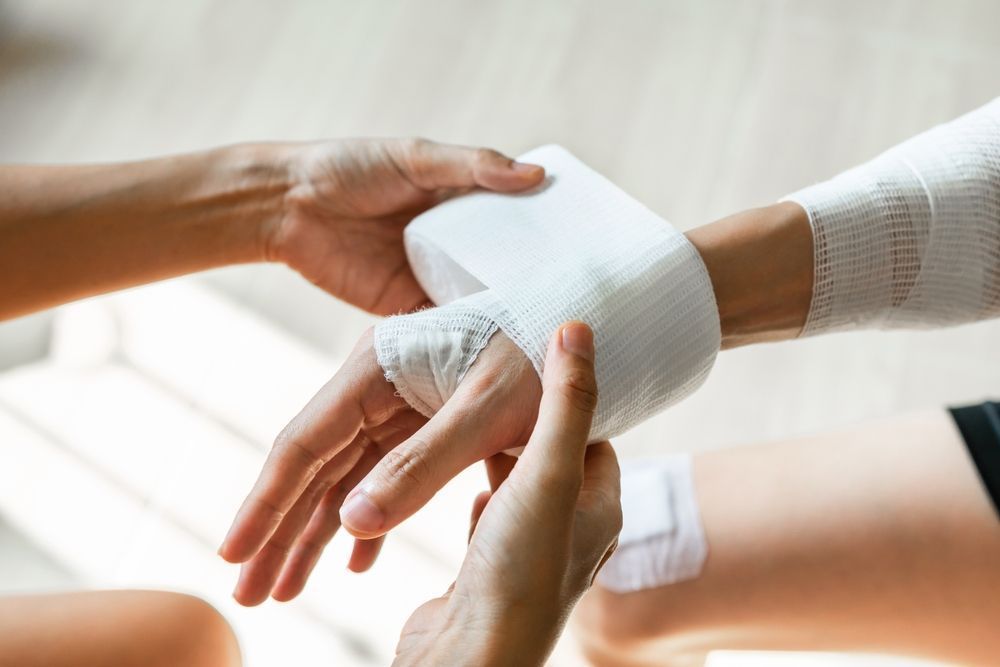
The Department confirmed that the following types of medicated wound care dressings and gels qualify as exempt prescription drugs, as each is a compound, substance, or preparation applied directly to the human body to treat or prevent disease, and each carries an FDA "Rx Only" label.
- Antimicrobial silver dressings: These dressings release silver ions to reduce microbial load and create an antimicrobial barrier at the wound site (e.g., Acticoat Flex 3, SilvaSorb Gel)
- Antimicrobial honey dressings: These dressings contain medical-grade honey applied topically to inhibit bacterial growth, reduce edema, and support tissue regeneration (e.g., MEDIHONEY Paste, MEDIHONEY Dressings)
- PHMB-impregnated dressings: These dressings contain broad-spectrum antimicrobial agent that kills pathogens and inhibits biofilm formation (e.g., Kerlix AMD, PHMB Hydrophilic Foam Dressing)
- Analgesic dressings: These dressings are lidocaine-containing hydrogels that relieve wound pain while maintaining a moist healing environment (e.g., Astero Hydrogel with 4% Lidocaine, RegeneCare HA 2% Lidocaine Hydrogel)
- Enzymatic debriding agents: These agents are proteolytic enzymes that digest and remove necrotic tissue from chronic wounds (e.g., Santyl Ointment)
- Growth factor dressings and gels: These dressings & gels deliver growth factor proteins to stimulate tissue regeneration and angiogenesis in non-healing wounds (e.g., Regranex Gel)
- Charcoal dressings: These dressings contain activated charcoal that absorbs wound exudate and reduces bacterial load in malodorous or infected wounds (e.g., ACTISORB Silver 220)
- Collagen-based dressings: These dressings provide a structural scaffold for tissue growth and bind matrix metalloproteinases that degrade the wound bed (e.g., Promogran Prisma, Fibracol Plus)
- Skin substitutes: These are advanced biological preparations that restore damaged skin structure, protect against infection, and promote angiogenesis in complex wounds (e.g., Apligraf, Dermagraft)
Qualifying Solutions
Irrigation solutions, inhalation solutions, and IV solutions all qualify under the ruling, as each is a preparation applied or administered directly into or onto the human body pursuant to a prescription.
- Irrigation solutions: These are used for wound and cavity cleansing, catheter flushing, dressing preparation, and medication dilution; applied directly to the body or a device worn on the body (e.g., 0.9% Sodium Chloride Irrigation, Sterile Water for Irrigation, Lactated Ringer's Irrigation Solution)
- Inhalation solutions: These are bronchodilators, corticosteroids, and saline solutions delivered via nebulizer to treat asthma, COPD, and other respiratory conditions (e.g., Albuterol Sulfate, Ipratropium Bromide, Budesonide Inhalation Suspension, Sterile Water for Inhalation, Sodium Chloride for Inhalation)
- Intravenous (IV) solutions: These are administered directly into the bloodstream for rehydration, electrolyte restoration, medication delivery, and fluid resuscitation (e.g., 0.9% Sodium Chloride Injection USP, Lactated Ringer's Injection USP, 5% Dextrose Injection USP)
Important Limitation: Diagnostic Testing Kits Are Taxable
The Department ruled that COVID-19 and RSV diagnostic testing kits do not qualify for the prescription drug exemption and remain subject to Tennessee sales and use tax. Although these kits are dispensed pursuant to a prescription and involve patient contact via nasal swabs, the Department found that the kits as a whole, comprising swabs, pipettes, tubes, reagents, and control materials bundled together, do not constitute a qualifying "compound, substance, or preparation" for direct human use. The reagents react with a collected sample outside the body, not with the patient directly, placing these kits within the Department's published guidance classifying medical kits, trays, and packs as taxable. Healthcare facilities should ensure they are paying tax on COVID-19 and RSV testing kits and not claiming the prescription drug exemption for these products.

How to Claim the Tennessee Sales Tax Exemption for Prescription Drug Products
To claim the prescription drug exemption on qualifying purchases, Tennessee healthcare providers should provide their supplier with a completed Sales and Use Tax Certificate of Exemption. The certificate should cite the exemption under Tenn. Code Ann. § 67-6-320(a) for prescription drugs for human use. Facilities should retain documentation confirming that each purchased product carries an FDA "Rx Only" label and is dispensed to patients pursuant to a practitioner's prescription.
How to Recover Tennessee Sales Taxes Already Paid to Vendors
Healthcare providers that paid sales tax to their vendors on qualifying prescription drug products can file a refund claim with the Department of Revenue under Tenn. Code Ann. § 67-1-1802. The statute of limitations runs three years from December 31 of the year the tax was paid. A healthcare provider that paid sales tax to its vendors must follow the customer refund procedure in § 67-1-1802(e), which requires two documented refund requests to the vendor, a signed Dealer Attestation (Form RV-F700001), and a refund amount exceeding $2,500 per vendor.
Once the healthcare provider has made two documented refund requests from the vendor and the vendor has provided a signed Dealer Attestation, the provider can submit the Claim for Credit or Refund of Sales or Use Tax (FV-1403301) directly with the Tennessee Department of Revenue. The provider must file a separate refund claim form for each vendor. Along with the completed refund claim form and dealer attestation form, the provider should include other supporting documentation like invoice copies, excel worksheets with purchase details, and product support confirming the prescription-required status of the qualifying products. The consultants at Agile Consulting Group have experience in recovering overpaid sales taxes from the Tennessee Department of Revenue and can assist any Tennessee healthcare provider with this cumbersome process.
Reach Out to Us with Questions
If you have any questions, comments or would like to discuss the specific circumstances you are encountering in regard to this issue or need assistance with a sales tax refund review or any other sales and use tax issue, please contact a member of Agile Consulting Group's sales tax consulting team at (888) 350-4TAX (4829) or via email at info@salesandusetax.com.
Latest Insights